
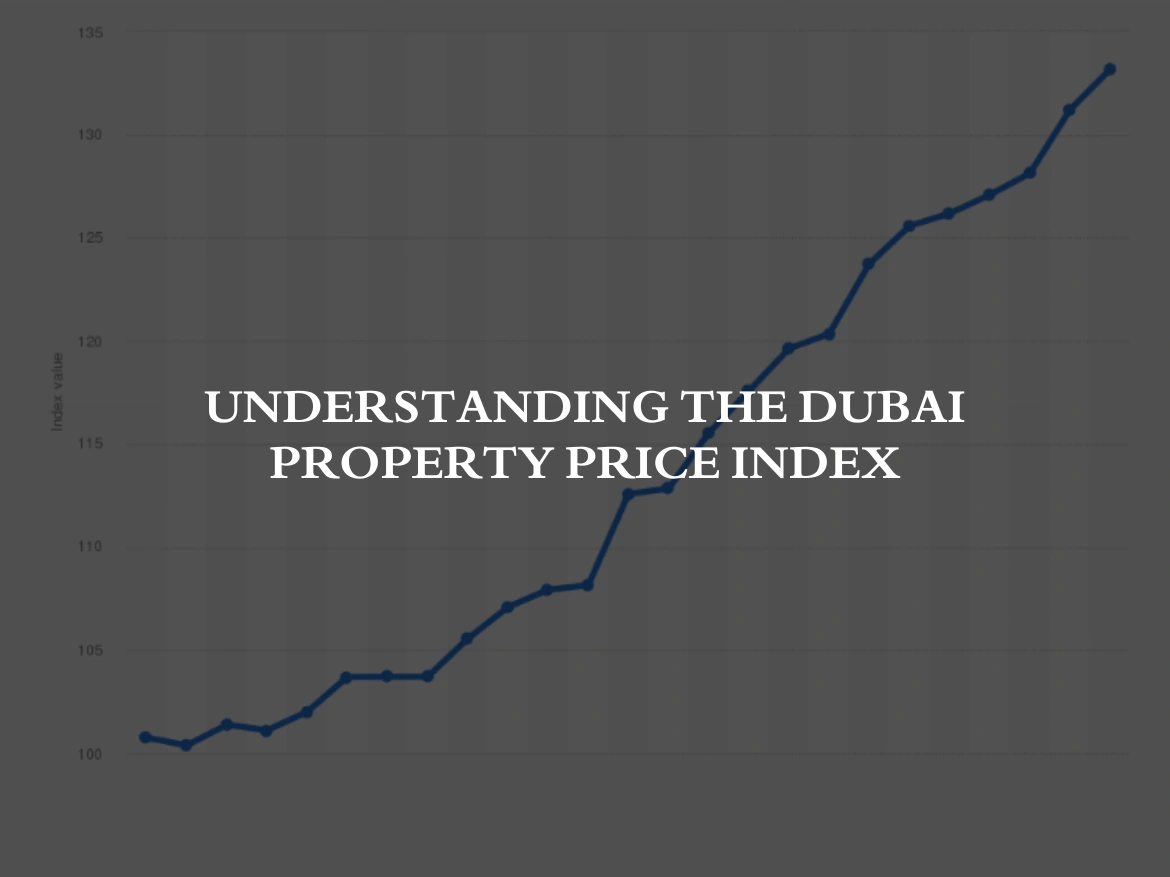
When it comes to determining how well the real estate market is doing, investors, developers, and analysts continue to rely on the Dubai property price index as one of the most important gauges. During the first three months of 2026, Dubai’s real estate market continued to expand. This achievement can be attributed to the city’s robust population growth, the demand from investors, and the launch of new projects in strategic districts.
Following a period of market expansion that lasted for several years, the first quarter demonstrates how price trends are shifting. Investors are increasingly turning to price index data in order to determine the optimal time to invest, as well as to identify new micromarkets and asset classes that are likely to experience an increase in value.
During the first three months of the year 2026, the growth cycle has become more established. Despite the fact that prices are remaining unchanged in prime areas, secondary and emerging communities are still experiencing a higher percentage of growth.
Overview on Dubai Property Price Index Trends in Q1 2026
The Dubai property price index for Q1 2026 shows steady year-over-year growth across all residential segments. However, growth rates have started to level off compared to the sharp rises seen in previous years.
Apartments are still the most popular type of property, but villa communities are still the best investments because there aren’t many of them and families still want to live there. As developers release projects at higher launch prices than in the past, off-plan launches are also changing price benchmarks.
Dubai Property Price Index Q1 2026 : What is in the Segment Performance
| Segment | Q1 2025 Avg Price Change (YoY) | Q1 2026 Avg Price Change (YoY) | Market Insight |
|---|---|---|---|
|
Apartments |
+14% |
+11% |
Growth stabilizing but demand strong |
|
Villas & Townhouses |
+18% |
+15% |
Supply shortage supports appreciation |
|
Waterfront Properties |
+16% |
+13% |
Premium segment remains adaptive |
|
Affordable Housing |
+12% |
+14% |
Strong demand from new residents |
|
Off-Plan Properties |
+15% |
+16% |
Launch price inflation continues |
According to the data, price growth is slowing down in established neighborhoods, but it’s speeding up in new neighborhoods. Due to demand from end users, the affordable and mid-market segments are doing very well.
Important Factors Behind Q1 2026 Price Fluctuations
In 2026, the price index is being shaped by a number of structural factors. As the population grows, more people need to live in homes, and investments in infrastructure are making development corridors bigger. Long-term residency programs and the trend of businesses moving are also affecting people’s decisions to buy.
Supply dynamics are still very important. Even though there are more new launches, there are still not many ready-to-move-in properties in prime areas, which helps keep prices stable. More investors are also getting into the market thanks to flexible payment plans, which drives up the price of launches.
The move toward living in communities, integrated developments, and lifestyle amenities is also changing the ways that homes are valued.
Area Wise Performance : Dubai Property Price Index Q1 2026
| Areas | Price Trend in Q1 2026 | Investor Understanding | Strategy Outlook |
|---|---|---|---|
|
Dubai Marina |
Stable growth |
Mature market |
Income-focused investment |
|
Downtown Dubai |
Moderate growth |
Premium resilience |
Long-term hold |
|
Dubai Hills Estate |
Strong growth |
High end-user demand |
Capital appreciation |
|
Jumeirah Village Circle |
Above-average growth |
Rental-driven demand |
Yield strategy |
|
Dubai South |
High growth |
Emerging corridor |
Early-stage entry |
|
MBR City |
Strong growth |
Luxury expansion |
Appreciation strategy |
Need a More information About It?
Our agents will help you explore premium options tailored to your lifestyle, location preferences, and investment goals.
What Q1 2026 Index Data interprets?
The Q1 price index shows that the market is changing from fast growth to steady growth. During this phase, strategic investors tend to do better than speculative buyers. It gets more important when you enter, and micro-location analysis plays a bigger role in how well you do.
Off-plan price trends show that developers expect demand to stay high, which is shown by higher launch benchmarks. Investors who get in early on in new communities may still be able to make money before the project is finished.
Diversifying a portfolio across asset classes is becoming more common. Investors are putting together properties that focus on growth and properties that focus on yield.
Short-Term Inference for 2026
Price growth is expected to continue in the short term, but at a slower rate. Analysts think that the mid-market and emerging communities will move the index until 2026. On the other hand, they think that the luxury markets will stay stable with some growth.
Due to flexible payment plans and ongoing foreign investment, the number of transactions is likely to stay high. Price stability is also helped by the demand for rentals, especially in places where there aren’t many available units.
It looks like the market is expanding in a healthy way, not getting too hot, which is usually a good sign for long-term investors.
Long-Term Inference of the Dubai Property Price Index
The Dubai property price index is used as a strategic standard to look at how the market cycles. Long-term trends show that corridors that are driven by infrastructure always do better over time. People who invest early in these areas often see their money grow over a number of years.
Index data also helps investors figure out if prices are in line with fundamentals like population growth, job growth, and the supply pipeline. This approach, which is based on data, lowers the risk of investments and makes decisions better.
Price index tracking will remain an important part of investment strategy as long as Dubai’s economy keeps growing.
Conclusion
According to information gathered during the first three months of 2026, the real estate market in Dubai is still in a sturdy structural position. The Dubai property price index demonstrates that the majority of market segments are continuing to experience consistent growth. New communities are still driving the index upward, despite the fact that rates of appreciation are slowing down in mature districts.
Investors should concentrate their efforts during this phase on strategic entry, developer selection, and analysis that is specific to the area. If investors keep a close eye on how the quarterly price index fluctuates, they will be able to identify opportunities before prices reach another level.
Continuing strength is anticipated, which will be supported by stable regulations, robust demand, and the launch of new projects, according to the outlook.
Frequently Asked Questions
You can use it as a standard to see how property prices change in different parts of Dubai.
Price increases happened in most areas, though they were not as fast as in previous years.
Strong growth was seen in off-plan and affordable housing because new residents wanted them.
Yes, villa prices keep going up because there aren’t enough villas to go around and families still want to buy them.
New growth corridors like Dubai South and Dubai Hills Estate are very important.

Join The Discussion